

Mold vs. Mildew: What's the Difference and Why It Matters
Many people use the words "mold" and "mildew" interchangeably, but they are not exactly the same thing. Both are types of fungi that thrive in damp environments, yet they differ in appearance, the way they spread, and the potential problems they can cause.
Understanding the difference can help homeowners know when it's time to call a professional.
What Is Mildew?
Mildew is usually the easier of the two to identify. It often appears as:
- White, gray, or yellow patches
- A flat or powdery texture
- Growth on shower walls, window sills, and damp fabrics
- A mild musty odor
Mildew typically grows on surfaces and is often easier to clean when caught early.
What Is Mold?
Mold is generally more serious because it can spread quickly and penetrate porous materials.
Mold often appears as:
- Black, green, brown, or orange spots
- Fuzzy or slimy textures
- Growth behind walls or under flooring
- Strong musty odors
Mold can grow on:
- Drywall
- Wood framing
- Carpeting
- Ceiling tiles
- Insulation
- HVAC systems
Because mold often grows out of sight, the visible portion may only be a small part of the problem.
What Causes Mold and Mildew?
Both mold and mildew require moisture to grow.
Common causes include:
- Roof leaks
- Plumbing leaks
- Flooding
- High indoor humidity
- Poor ventilation
- Condensation around windows
- Damp basements or crawl spaces
Controlling moisture is the most effective way to prevent fungal growth.
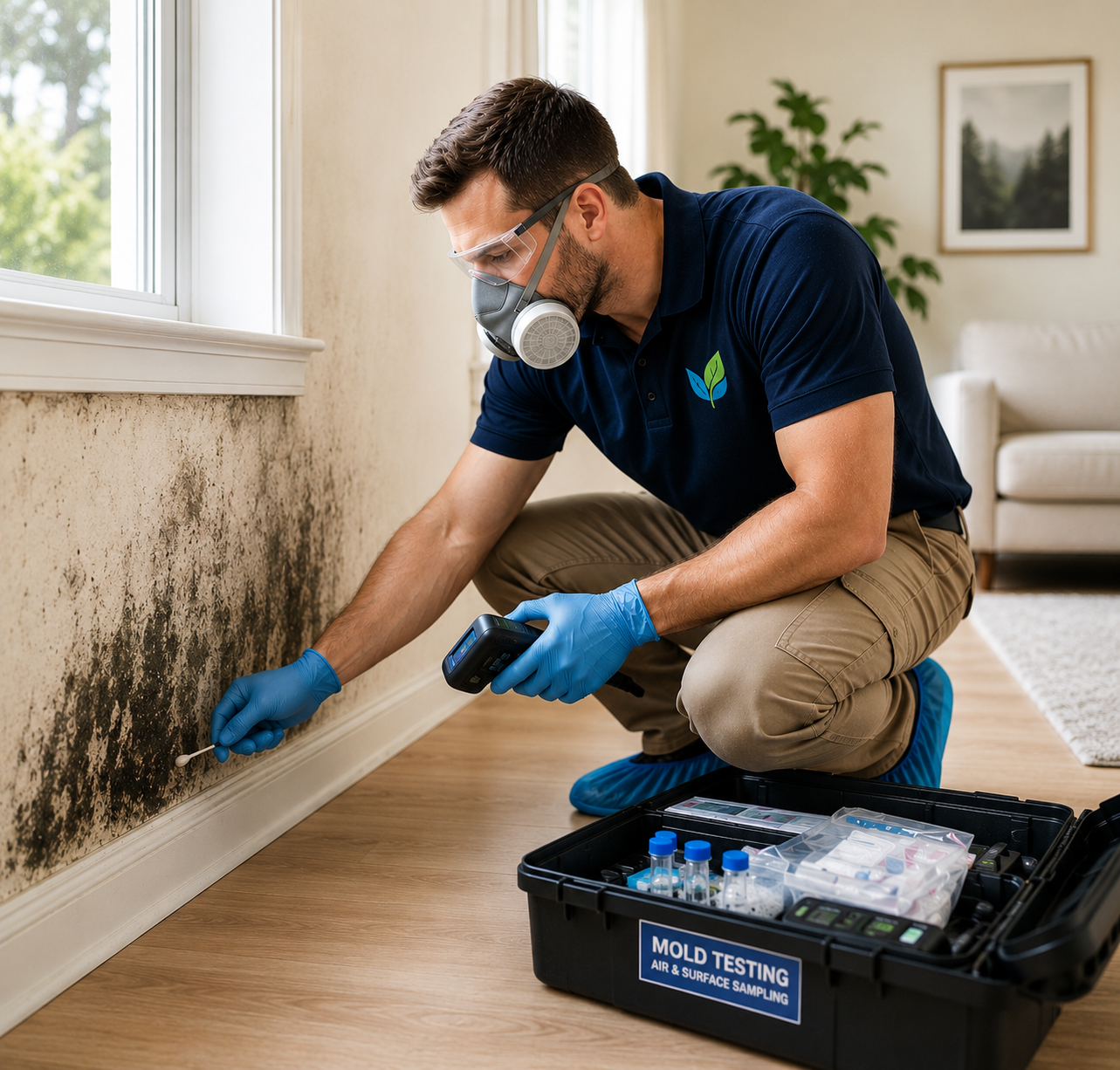
Why Professional Testing Matters
It isn't always obvious whether you're dealing with mold, mildew, or a larger moisture problem hidden behind walls.
Professional mold testing can help:
- Identify hidden mold growth
- Measure indoor air quality
- Detect moisture issues
- Determine the extent of contamination
- Provide laboratory analysis when needed
Testing provides clear answers and helps homeowners make informed decisions.
How to Prevent Mold Growth
Here are a few simple steps to help reduce the risk:
- Repair leaks promptly
- Keep indoor humidity below 60%
- Use exhaust fans in kitchens and bathrooms
- Clean and dry wet materials quickly
- Inspect basements and crawl spaces regularly
- Schedule professional inspections if you suspect hidden moisture
When to Call a Professional
If you notice a persistent musty smell, visible mold growth, recent water damage, or ongoing allergy-like symptoms, professional mold testing can help identify the source of the problem.
Early detection is often the key to protecting your home, improving indoor air quality, and avoiding costly repairs.
A healthy home starts with clean air and a dry, well-maintained environment.