

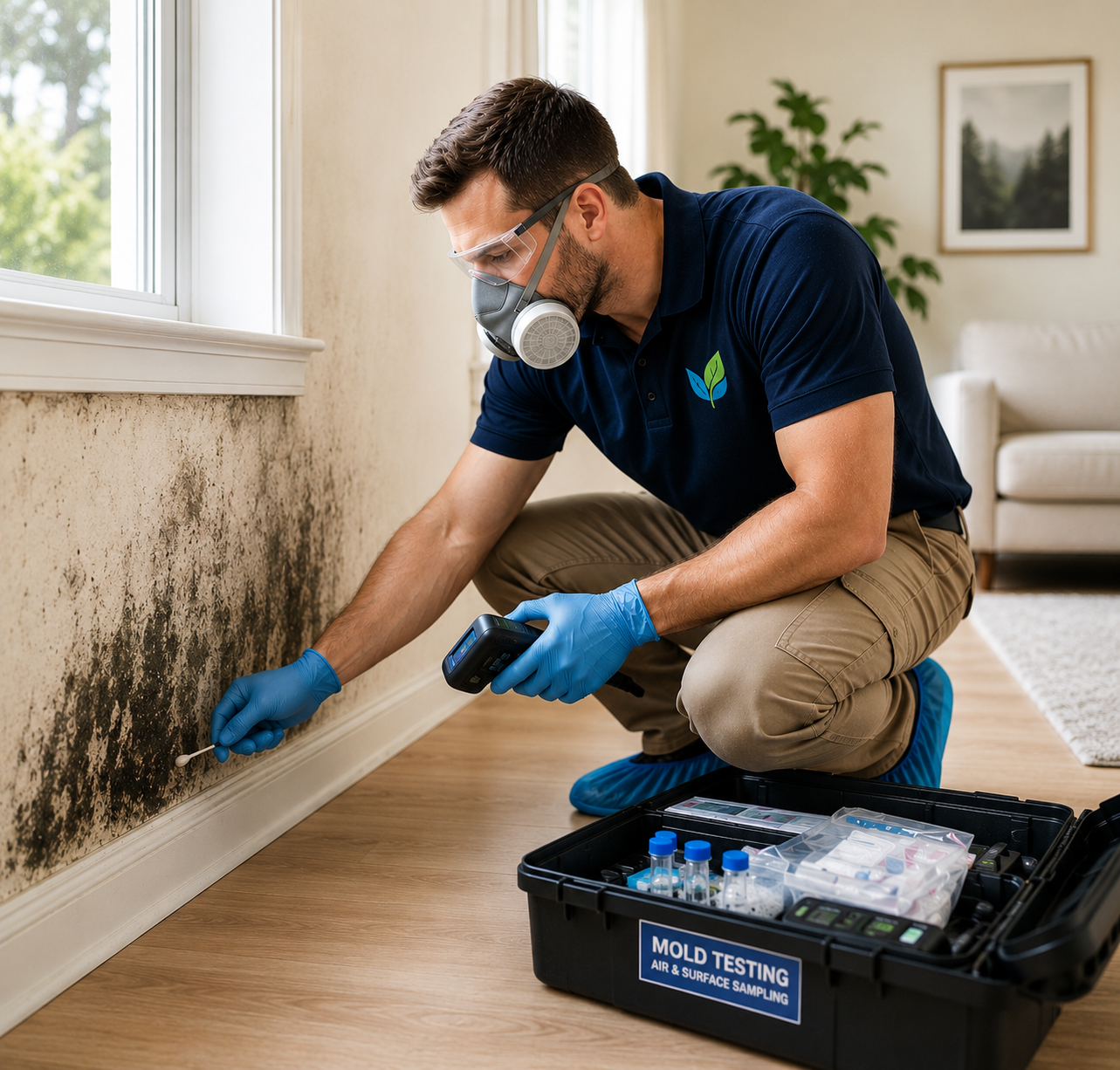
7 Signs You May Need Professional Mold Testing
Mold isn’t always visible. In many homes and businesses, mold can hide behind walls, under flooring, inside HVAC systems, or in damp crawl spaces. Even when you can’t see it, mold can affect indoor air quality and potentially impact your health.
Here are seven common signs that it may be time to schedule a professional mold inspection.
1. Musty or Unpleasant Odors
One of the most common indicators of hidden mold is a persistent musty smell. If you notice an earthy odor that doesn’t go away after cleaning, mold may be growing in areas you cannot see.
2. Recent Water Damage
Has your home experienced a roof leak, plumbing issue, flooding, or overflowing appliance? Moisture trapped behind walls or under flooring creates ideal conditions for mold growth. Even if the area appears dry now, mold can develop within 24 to 48 hours.
3. Visible Mold Growth
If you see black, green, white, or orange spots on walls, ceilings, or around windows, it’s important to determine how extensive the problem is. Surface mold is often only part of the issue, and professional testing can help identify hidden contamination.
4. Allergy-Like Symptoms Indoors
Do you experience sneezing, coughing, itchy eyes, congestion, or headaches that improve when you leave the building? Poor indoor air quality and mold spores may contribute to these symptoms.
5. High Humidity or Condensation
Excess humidity encourages mold growth. Frequent condensation on windows, damp walls, or humidity levels above 60% may indicate conditions that allow mold to thrive.
6. Buying or Selling a Home
A mold inspection can provide peace of mind during a real estate transaction. Identifying moisture issues or hidden mold before closing can help buyers and sellers avoid costly surprises.
7. Occupants With Respiratory Concerns
If someone in the home has asthma, allergies, or other respiratory sensitivities, maintaining good indoor air quality becomes especially important. Professional testing can help identify environmental issues that may affect comfort and health.
What Happens During a Mold Inspection?
A professional mold inspection typically includes:
-
Visual inspection of the property
-
Moisture detection and humidity measurements
-
Indoor air quality testing
-
Air or surface sampling when appropriate
-
Laboratory analysis of samples
-
A detailed report with findings and recommendations
Protect Your Indoor Environment
Mold problems are often easier and less expensive to address when discovered early. If you’ve noticed any of these warning signs, professional mold testing can help you understand what’s happening in your home or business and provide the information you need to move forward with confidence.
Clean indoor air starts with accurate testing and expert guidance.
Our Blogs
Latest Blogs –
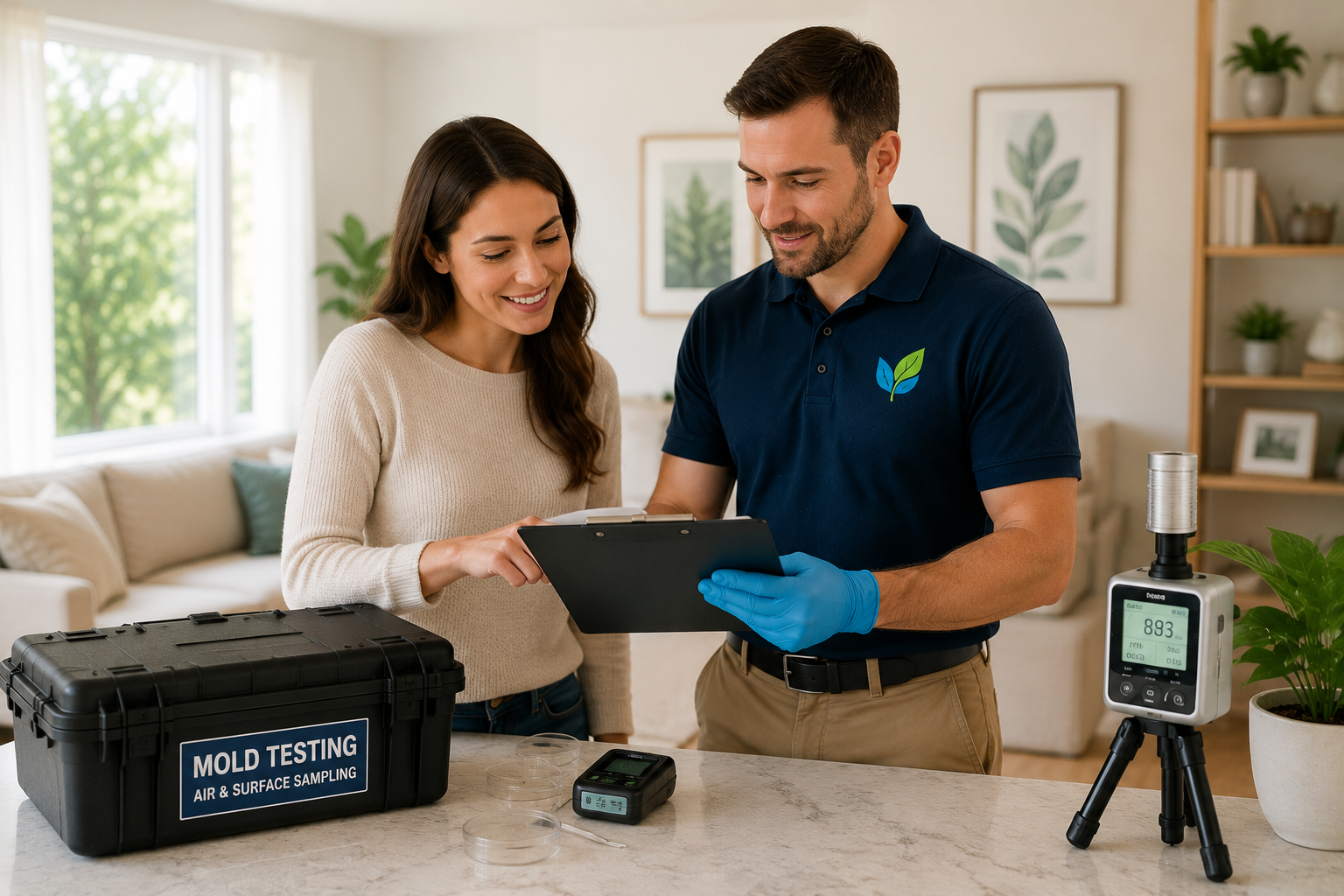
Mold vs. Mildew: What’s the Difference and Why It Matters
Mold vs. Mildew: What’s the Difference and Why It Matters Many people use the words “mold” and “mildew”…
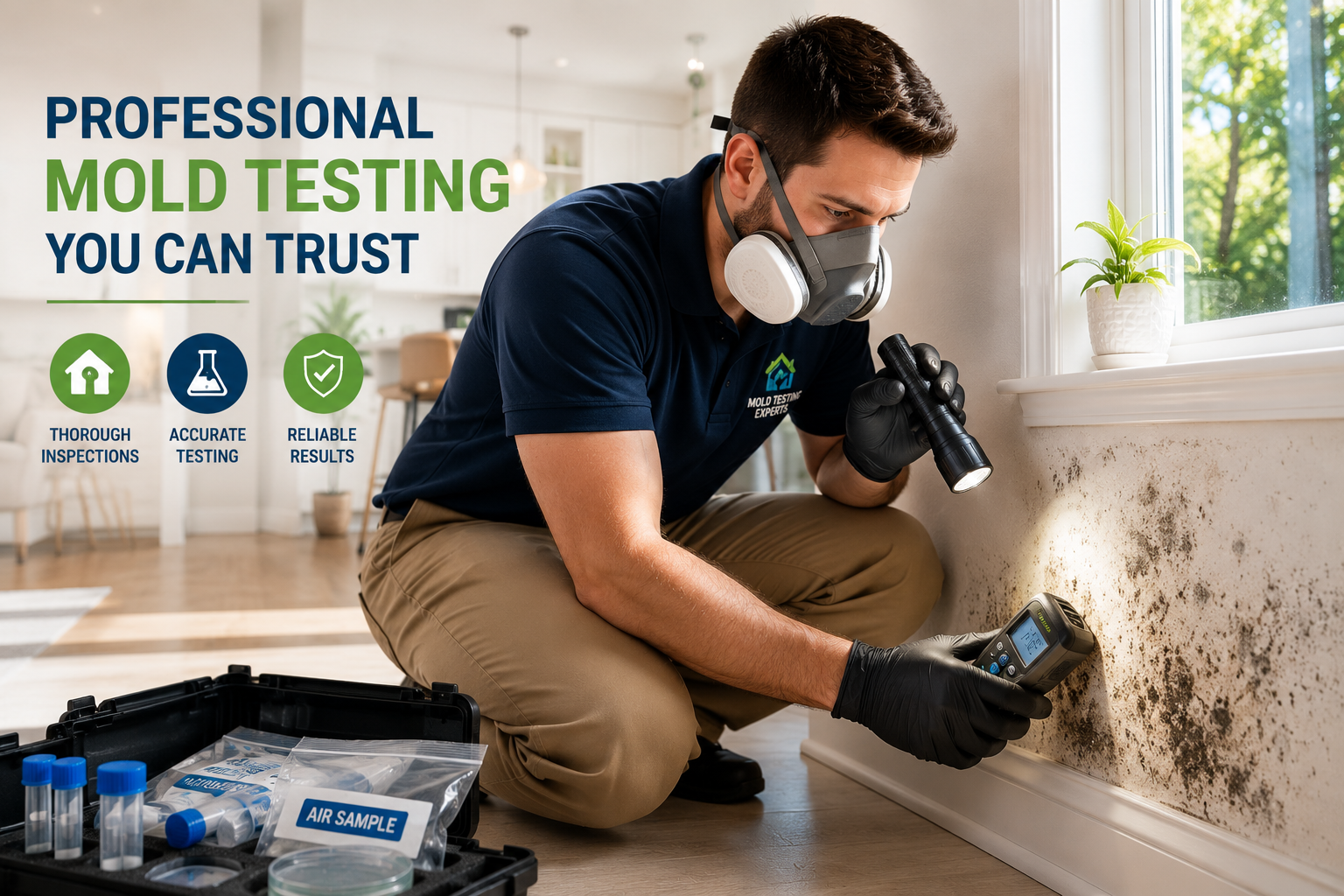
Is Mold Making You Sick? Common Symptoms to Watch For
Is Mold Making You Sick? Common Symptoms to Watch For Mold is a natural part of the environment, but when it grows…